
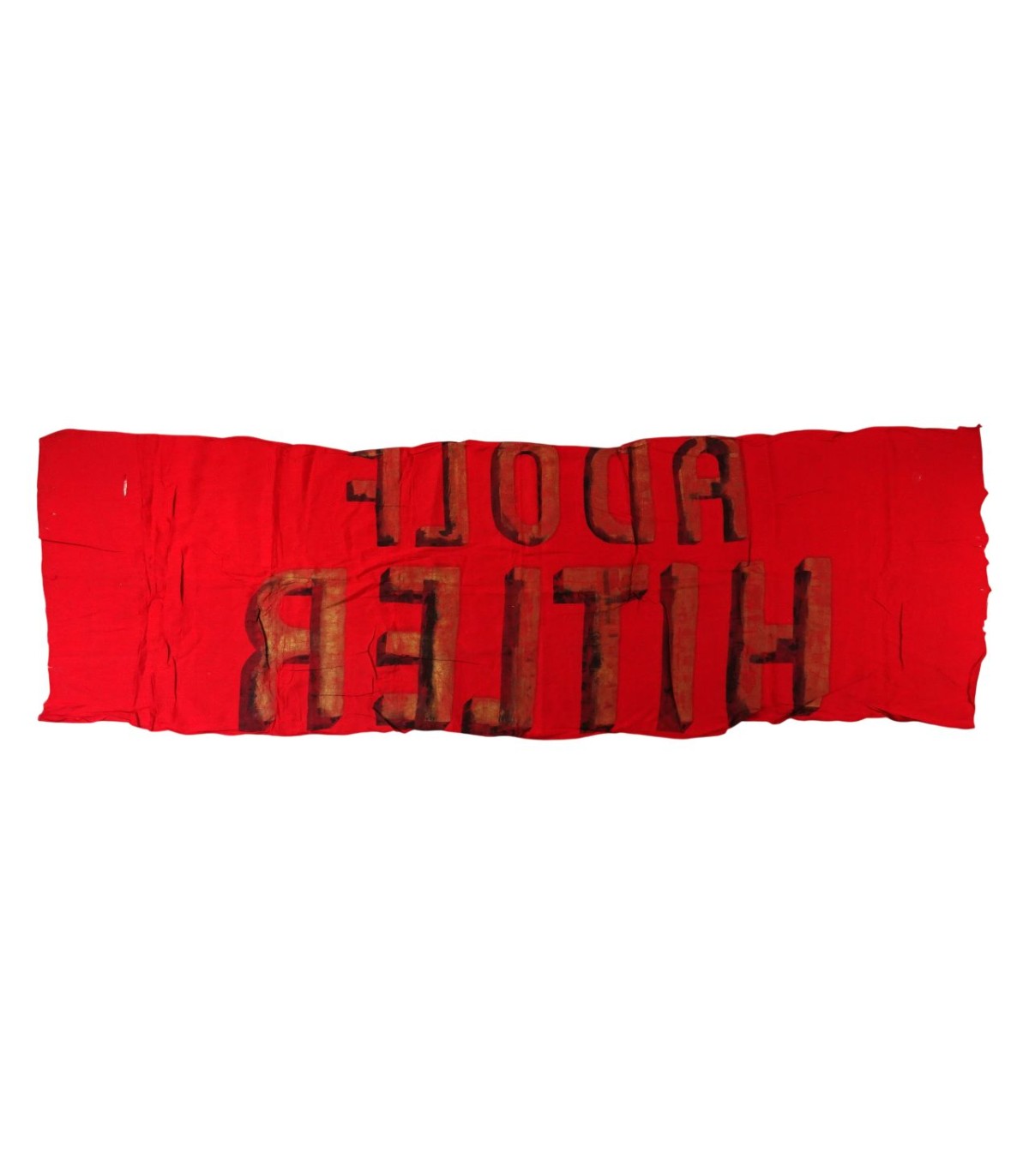
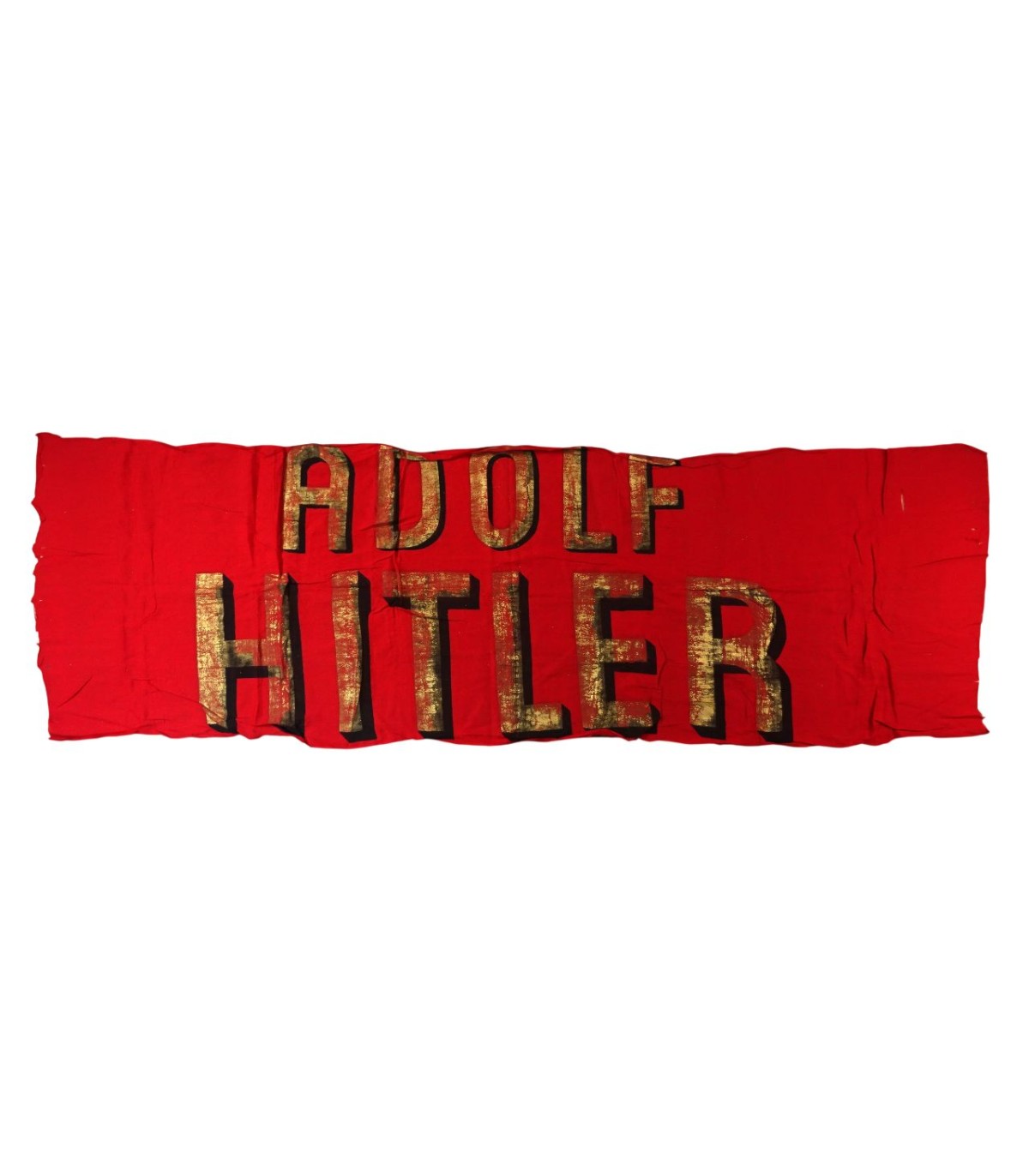
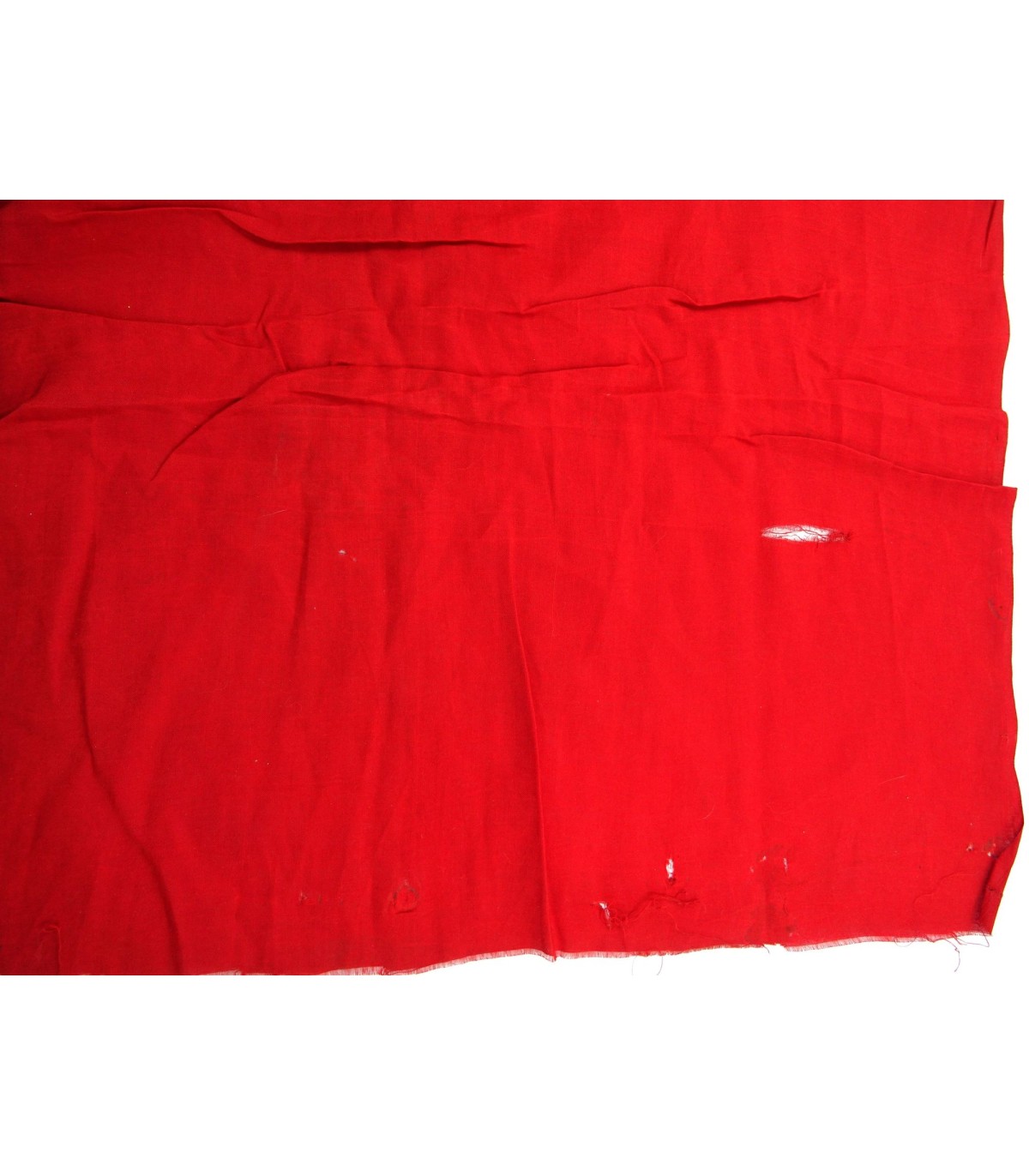


Adolf Hitler banner
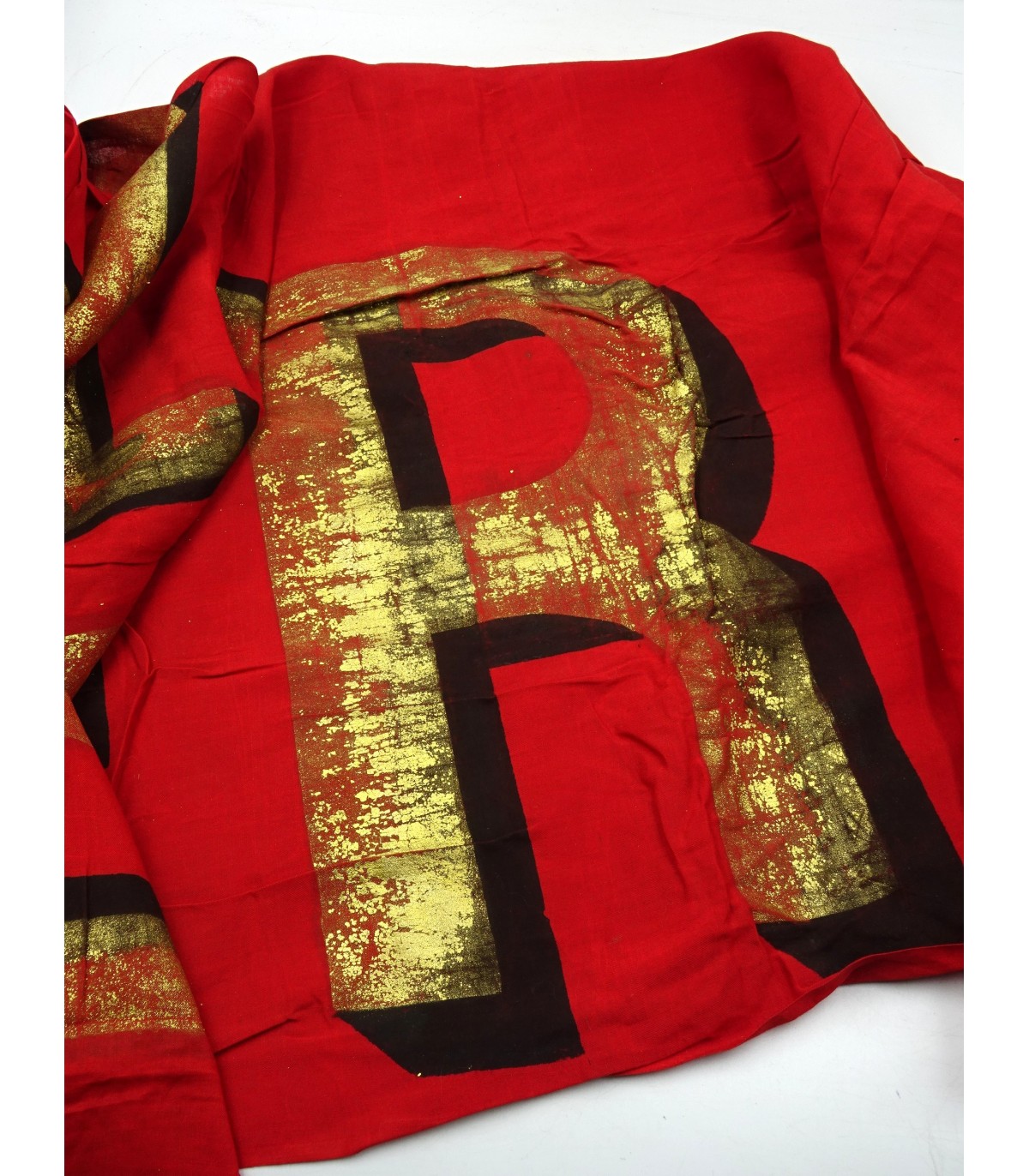
Adolf Hitler grandstand banner
€2,500.00
(VAT incl.)
Reference:
EN093
Love1
Add to wishlist
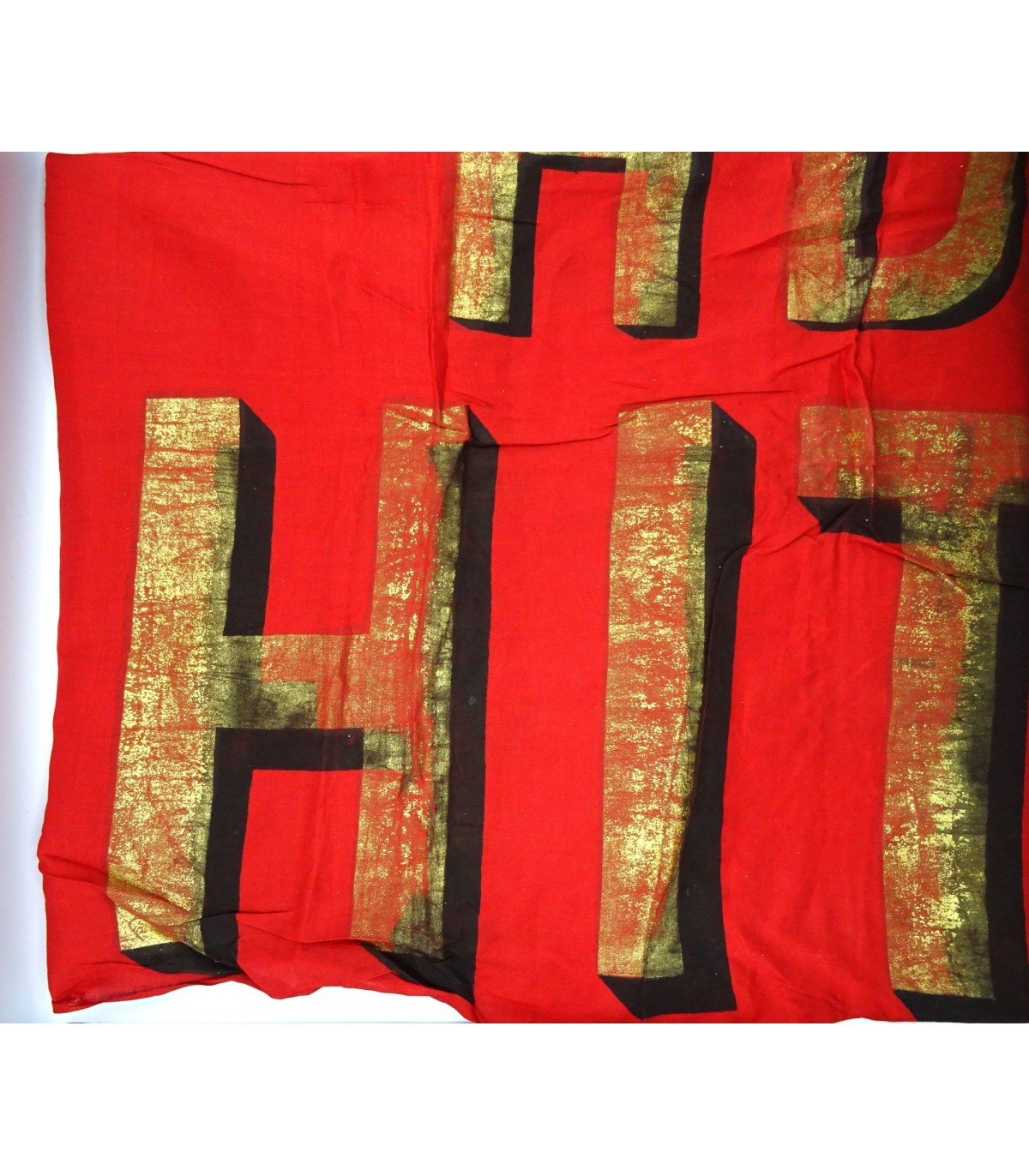
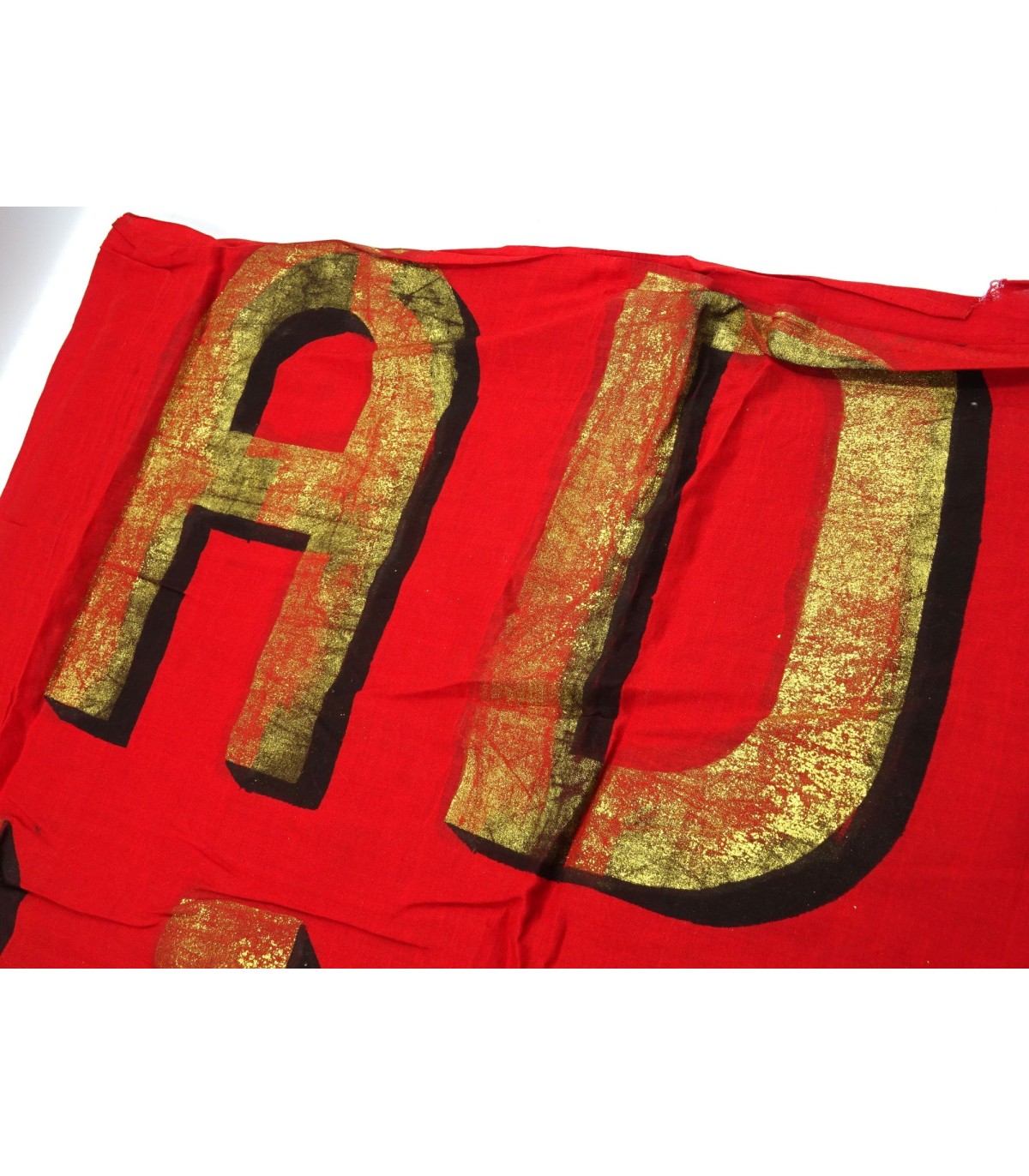
220x70cm. Black and gold letters. One can imagine that this banner was used to enhance a platform where the chancellor or candidate A.H. spoke. A museum piece, probably unique. Good condition-.
| historical background |
The Nazi Party, officially the National Socialist German Workers' Party (German: Nationalsozialistische Deutsche Arbeiterpartei or NSDAP), rose to power in Germany during the unstable context of the Weimar Republic, marked by the consequences of the Treaty of Versailles, economic crisis, and strong political fragmentation. Founded in 1920, the party rapidly evolved from a marginal movement into a mass organization structured around a strict hierarchy and an increasingly centralized political apparatus. Under the leadership of Adolf Hitler, it became the dominant political force in the early 1930s, seized control of the state in 1933, and progressively transformed the institutions of the Reich into a total system up to World War II.
During World War II, the Nationalsozialistische Deutsche Arbeiterpartei remained the political and ideological backbone of the regime. While its functions largely overlapped with those of the state apparatus, the party retained a key structural role in enforcing social and political control through its local and regional organizations. These branches ensured the implementation of central directives, the dissemination of propaganda, and close population oversight in coordination with other state and party structures. The NSDAP thus acted as a central coordinating mechanism across the regime’s political, administrative, and para-state components, contributing to the mobilisation of German society and the maintenance of the ideological system until the collapse of the Reich in 1945.
NSDAP-related items constitute a broad and coherent field within German WWII militaria collecting, ranging from party insignia and political awards to uniform components, administrative documents, and representational objects. Their importance lies both in their diversity and in their role within the visual structuring of the party, where each item reflects a codified system of hierarchy, status, and affiliation.
You may also like


€35.00
(VAT incl.)
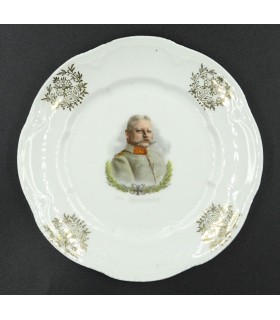
Small patriotic plate with the image of Fieldmarschall Hindenburg
€38.00
(VAT incl.)
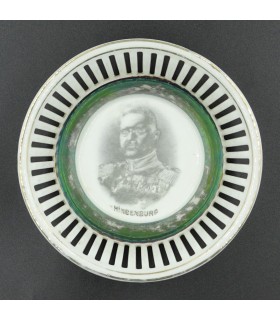
Small patriotic bowl with the image of Fieldmarschall Hindenburg
€370.00
(VAT incl.)
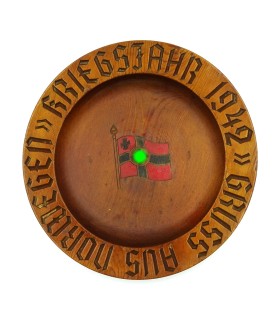
German occupation troops in Norway commemorative wooden plate

 Français