
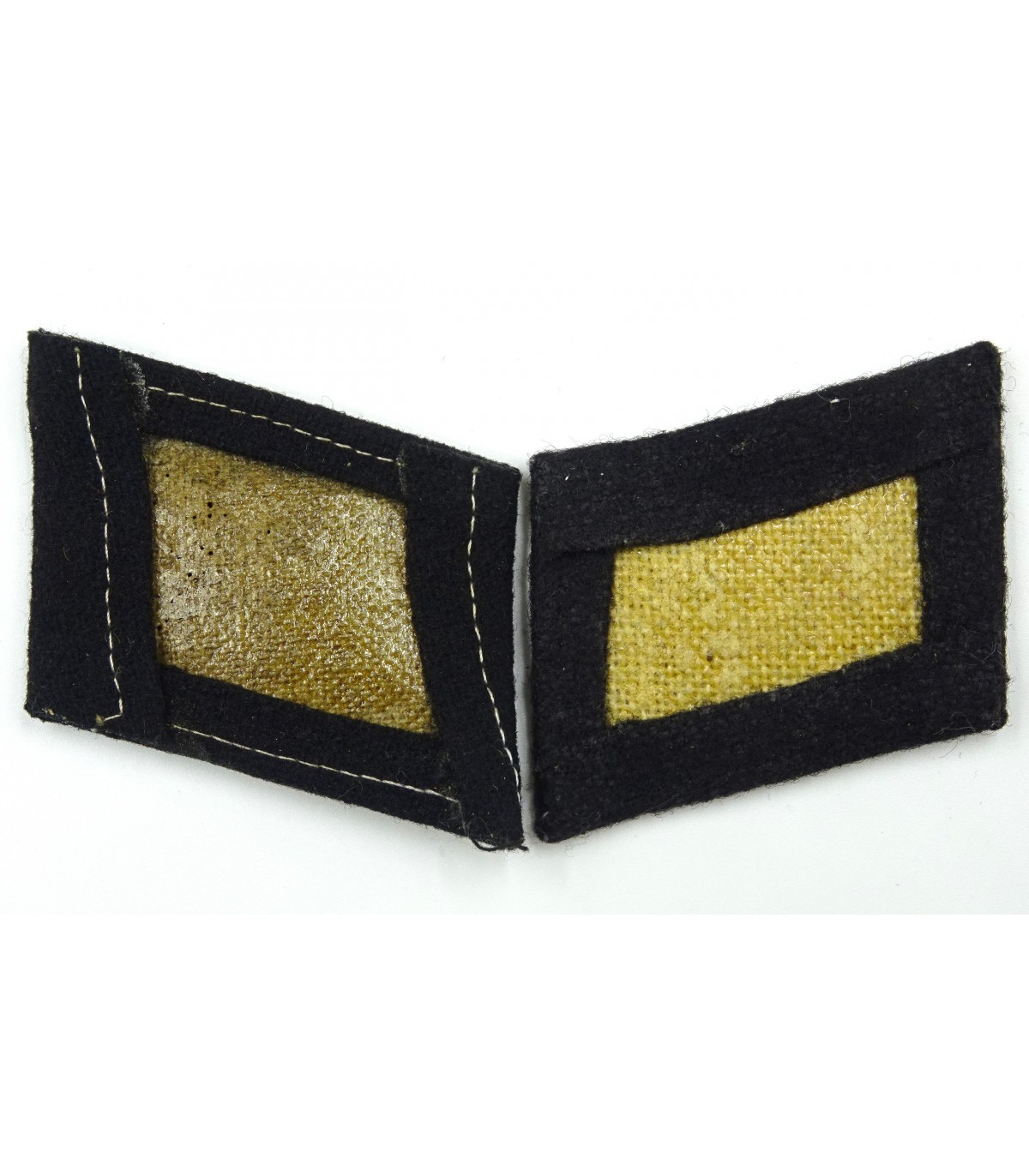
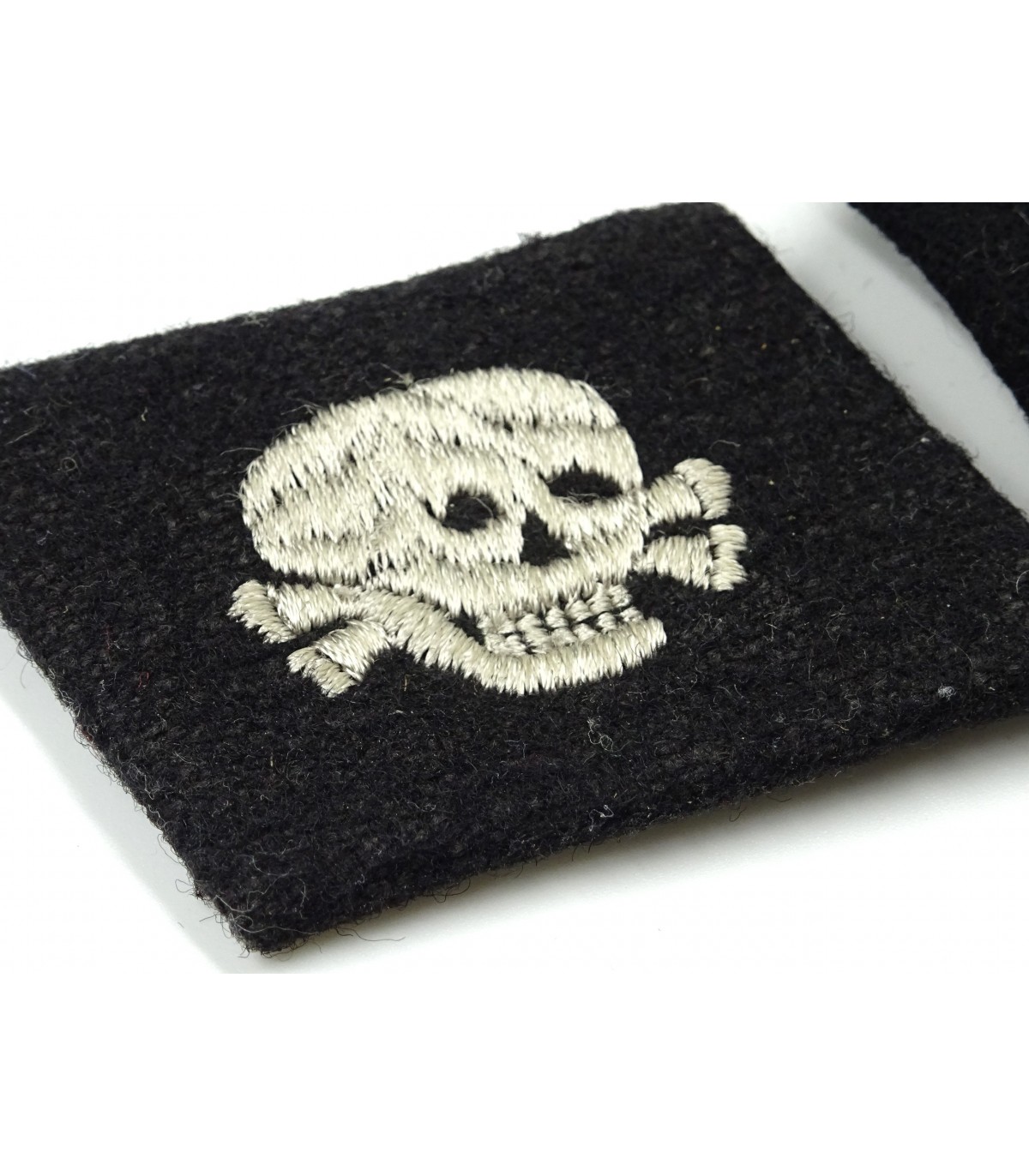
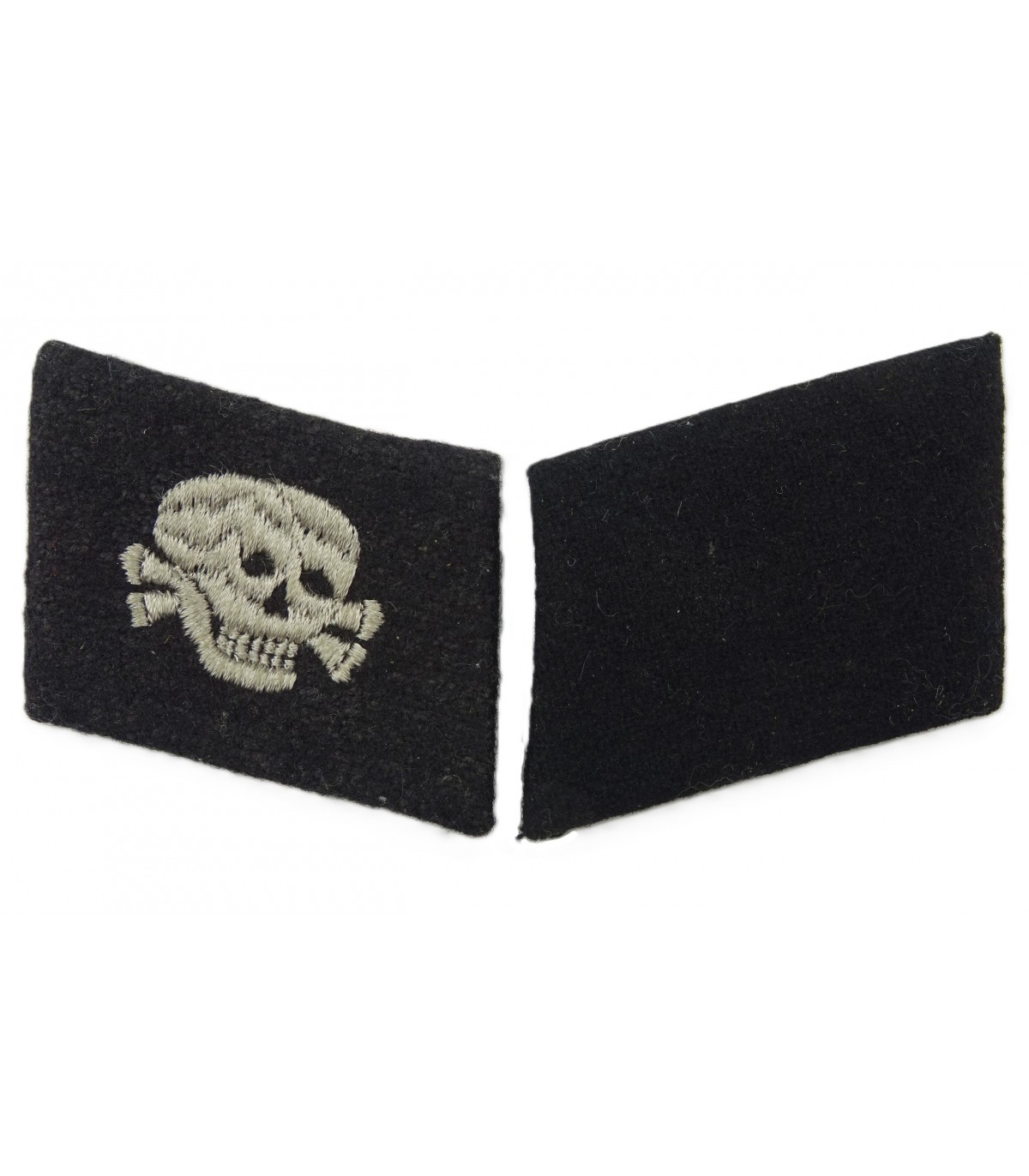


Totenkopf
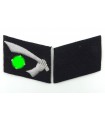
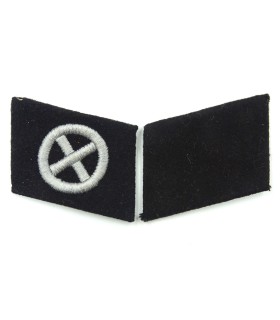
SS Totenkopf EM collar tabs pair
€1,200.00
(VAT incl.)
Reference:
DJ066
Love1
Add to wishlist
Machine embroidered on black wool. VGC.
| historical background |
The SS-Totenkopfverbände were a specialized branch of the SS in Germany, developed in the 1930s as part of the broader SS organizational structure before and during World War II. Operating under SS authority, this organization was responsible for the administration and security of camp systems, with a strictly hierarchical and regulated structure. It is most notably identified by its distinctive “Totenkopf” (death’s head) insignia, one of the most recognizable symbols associated with the SS.
The SS-Totenkopfverbände were organized into camp-based units, with personnel assigned to security, internal discipline, and daily operational functions. Associated uniforms and equipment followed specific regulations tied to this branch, with variations depending on period and rank. The system was highly codified, particularly in insignia, markings, and identification elements.
Historically, the SS-Totenkopfverbände played a central role in the operation of the camp system established by the SS between 1933 and 1945. In the field of militaria and historical collecting, items linked to this branch are studied for their rarity, regulatory variations, and overall consistency, reflecting the evolution of specialized SS structures during the conflict.
You may also like
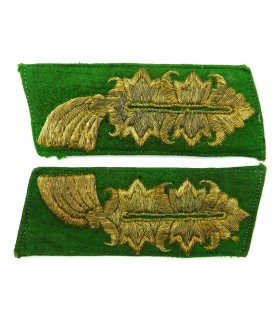
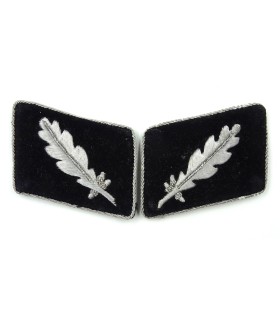
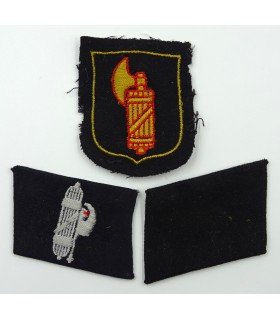
€700.00
(VAT incl.)
Waffen-SS foreign volunteer collar tabs pair and sleeve insignia, Italienische Nr.1
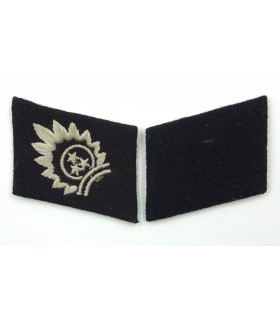
€900.00
(VAT incl.)
Waffen-SS foreign volonteer collar tabs pair, Lettische Nr.1
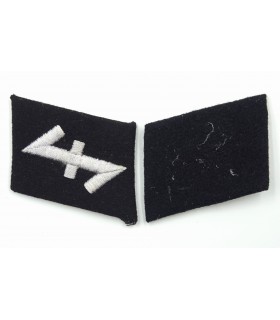
€850.00
(VAT incl.)
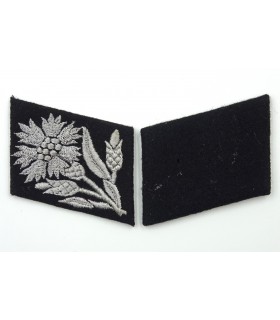
Waffen-SS foreign volunteer collar tabs pair 'Maria Theresia'
€880.00
(VAT incl.)
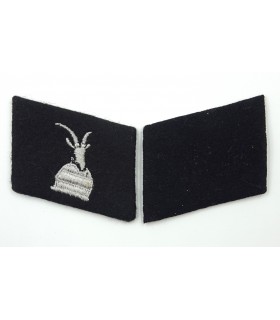
Waffen-SS bosnian foreign volunteer collar tabs pair, Skanderbeg
€700.00
(VAT incl.)
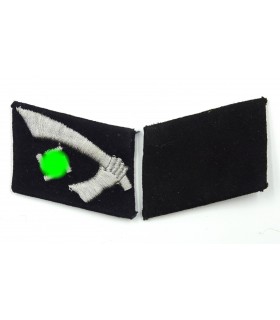
Waffen-SS foreign volunteer collar tabs pair, Handschar
€700.00
(VAT incl.)
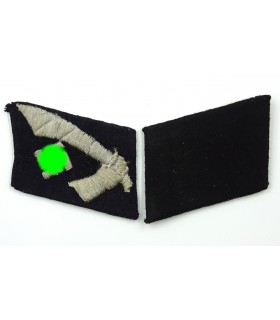
Waffen-SS foreign volunteer collar tabs pair, Handschar

 Français