


€300.00
(VAT incl.)
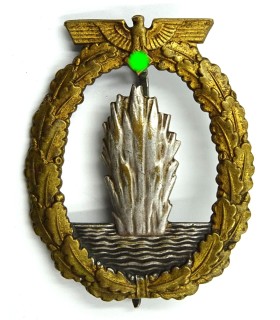
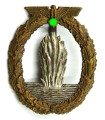
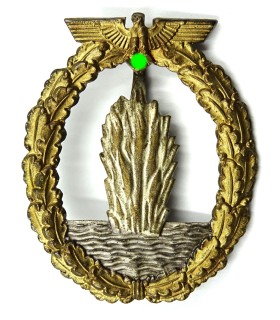
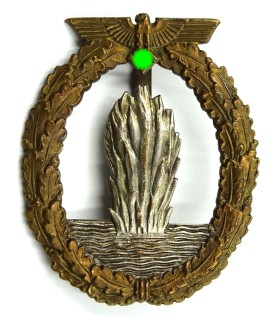
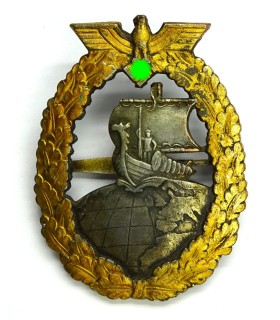
Minesweeper Badge by Schwerin Berlin, early production in tombac.

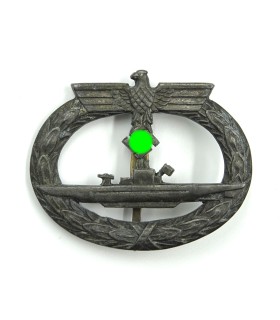
U-Boot front spange in Bronze by Schwerin Berlin
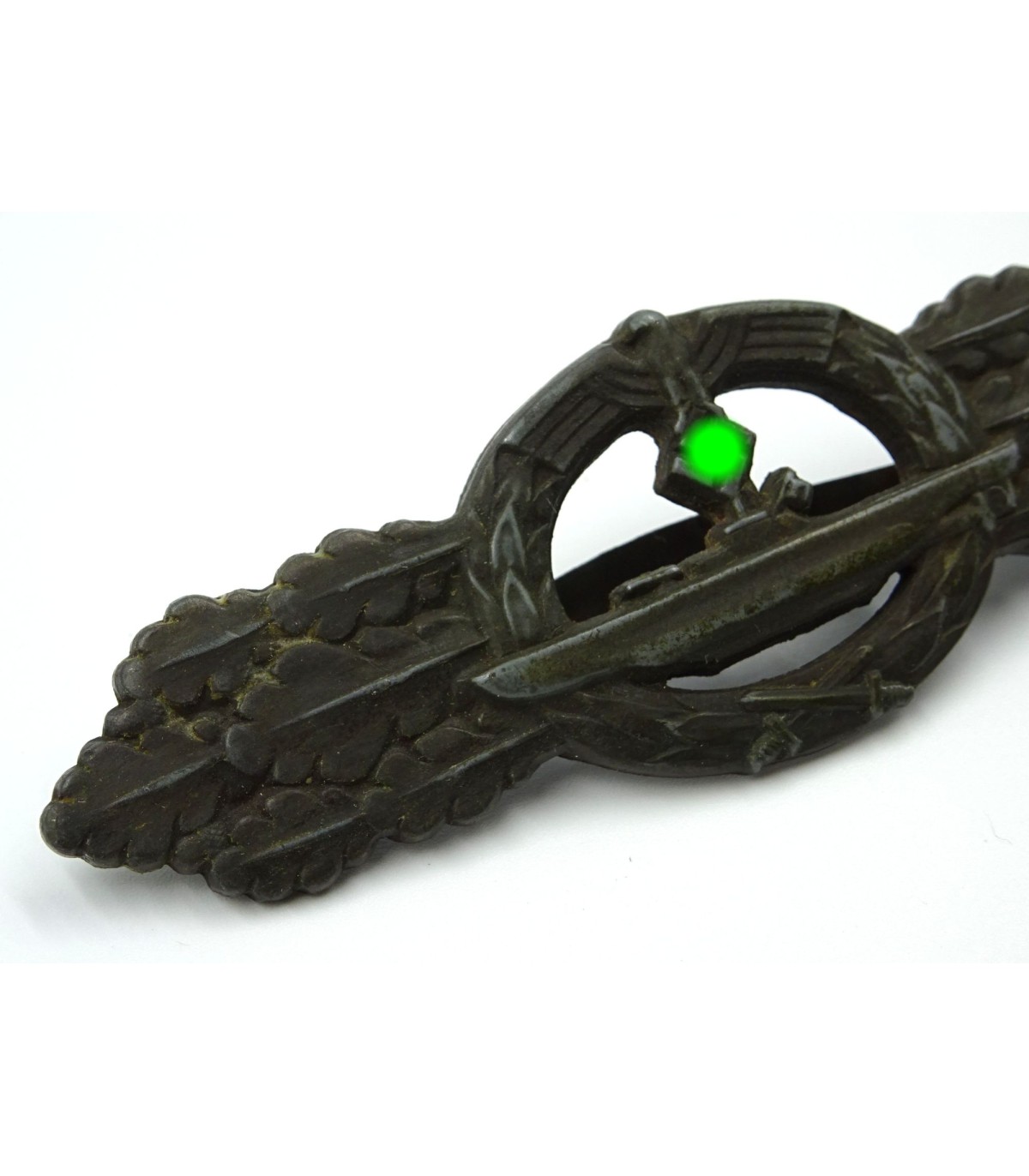
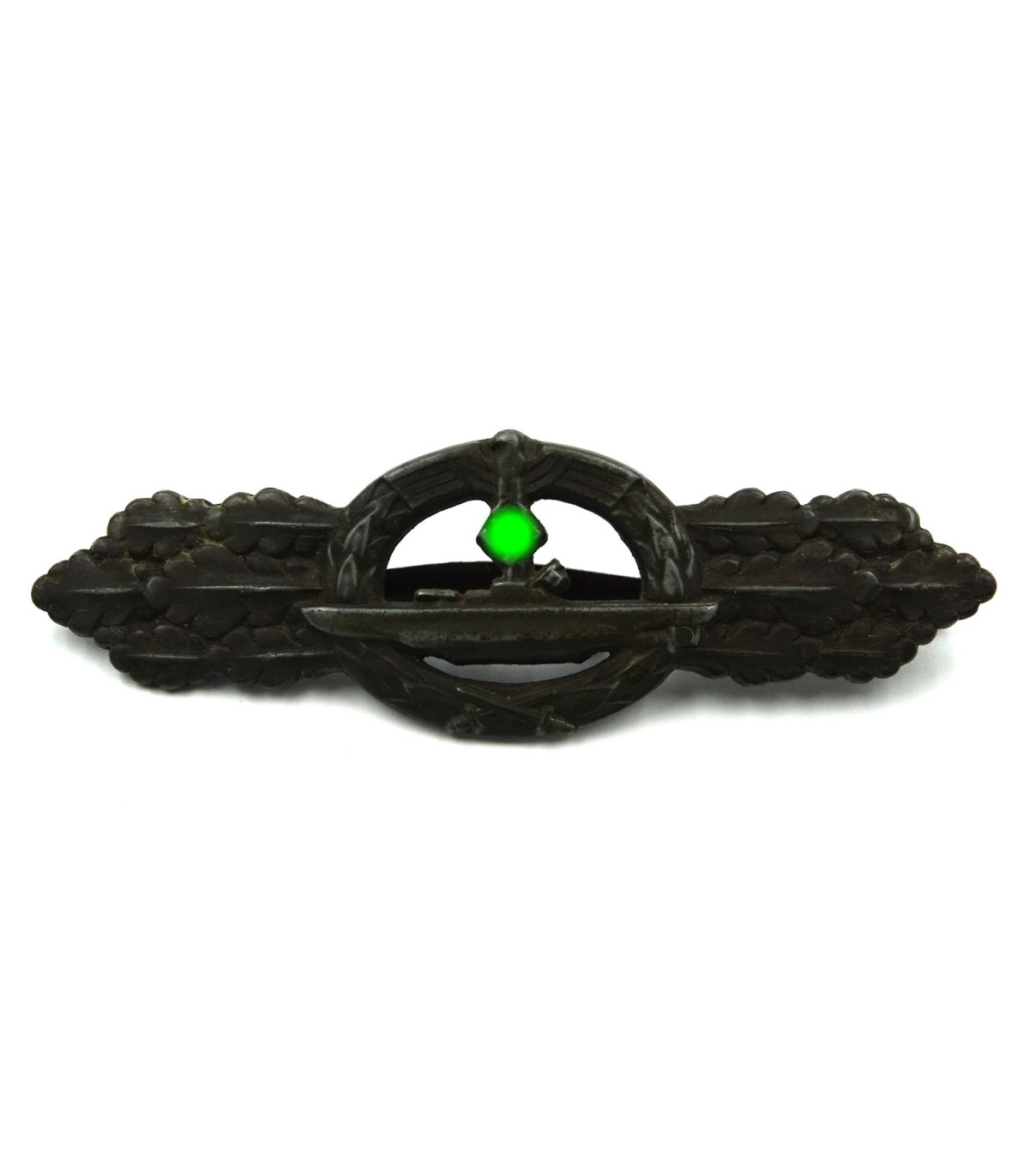
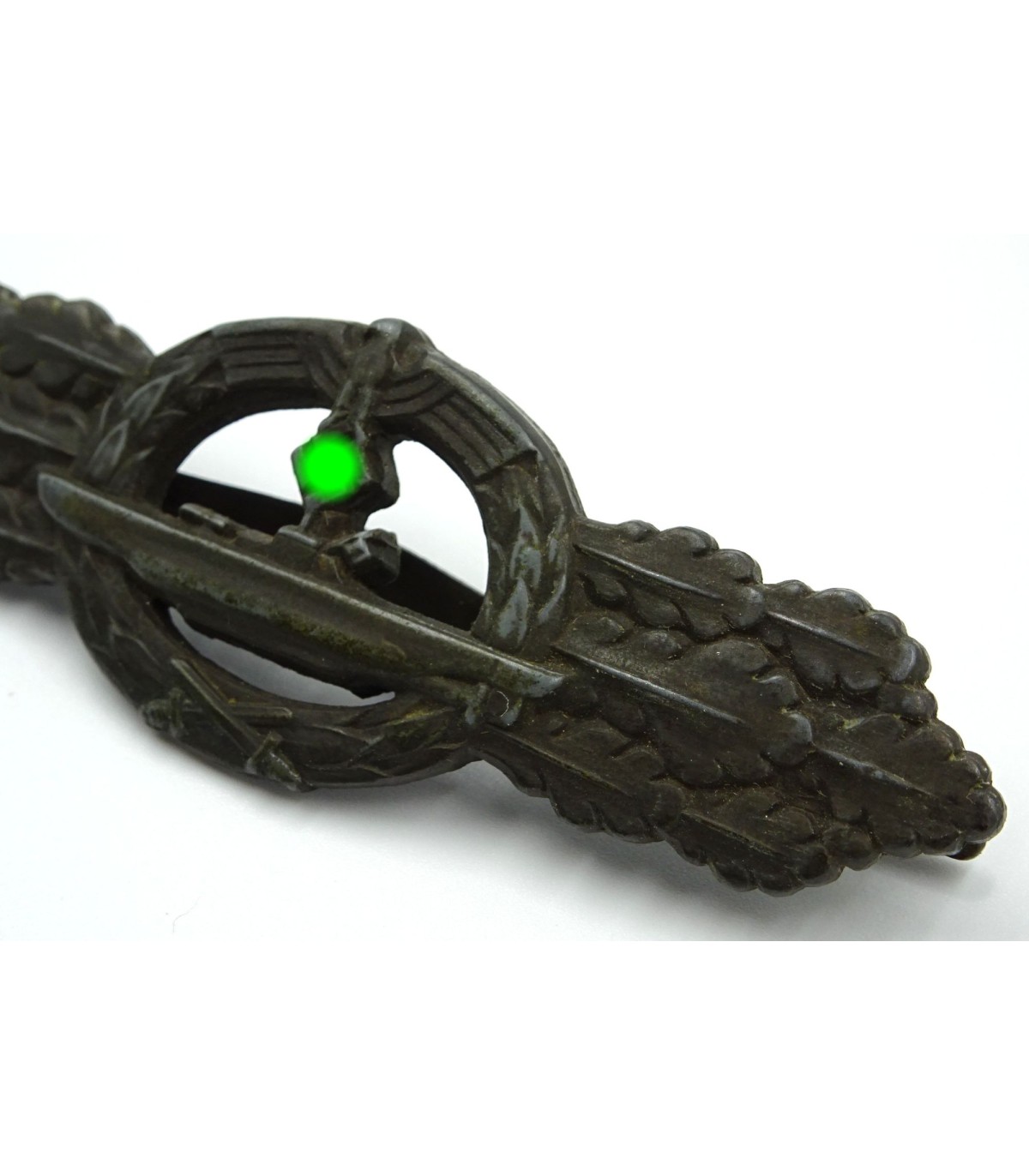
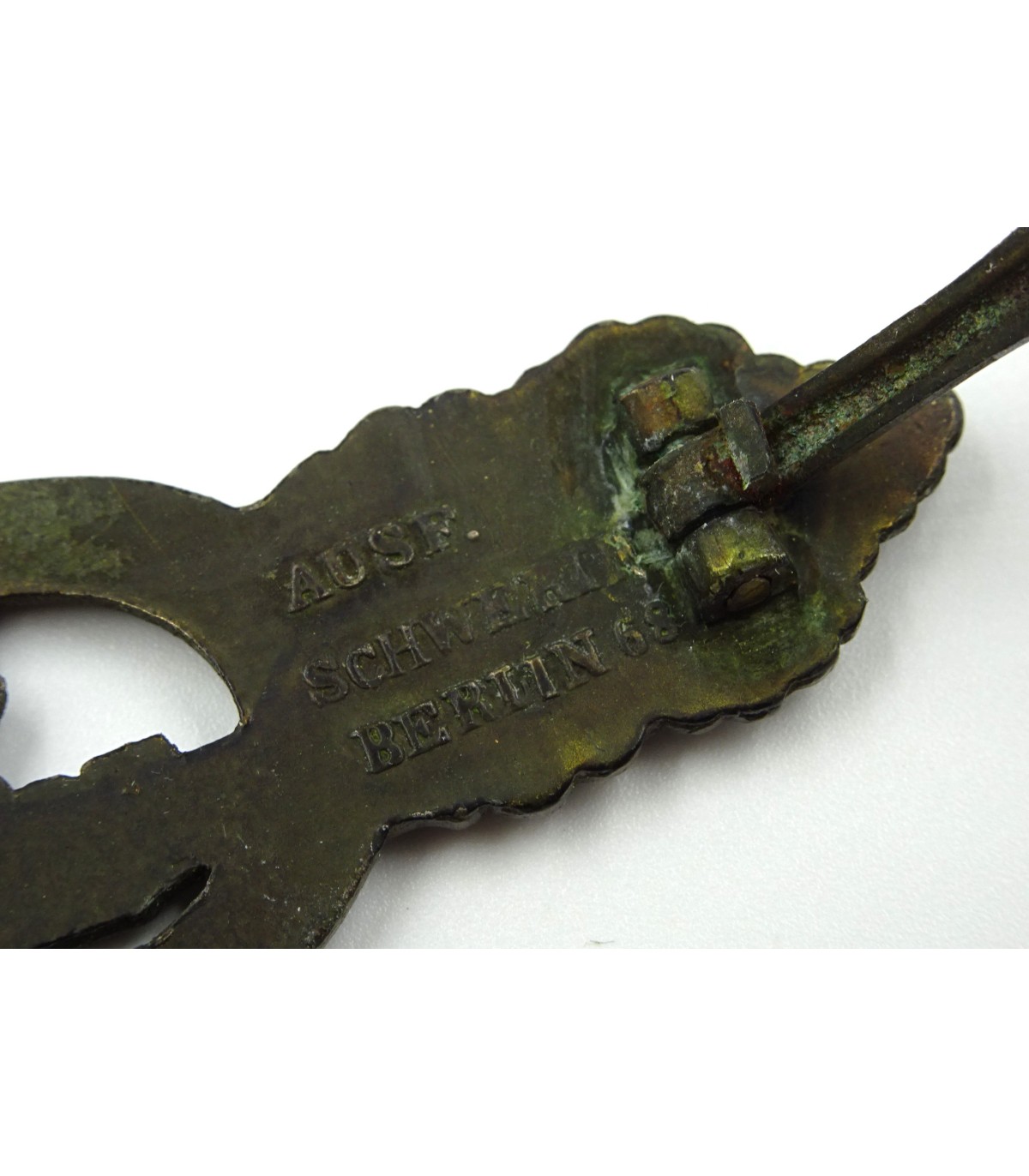
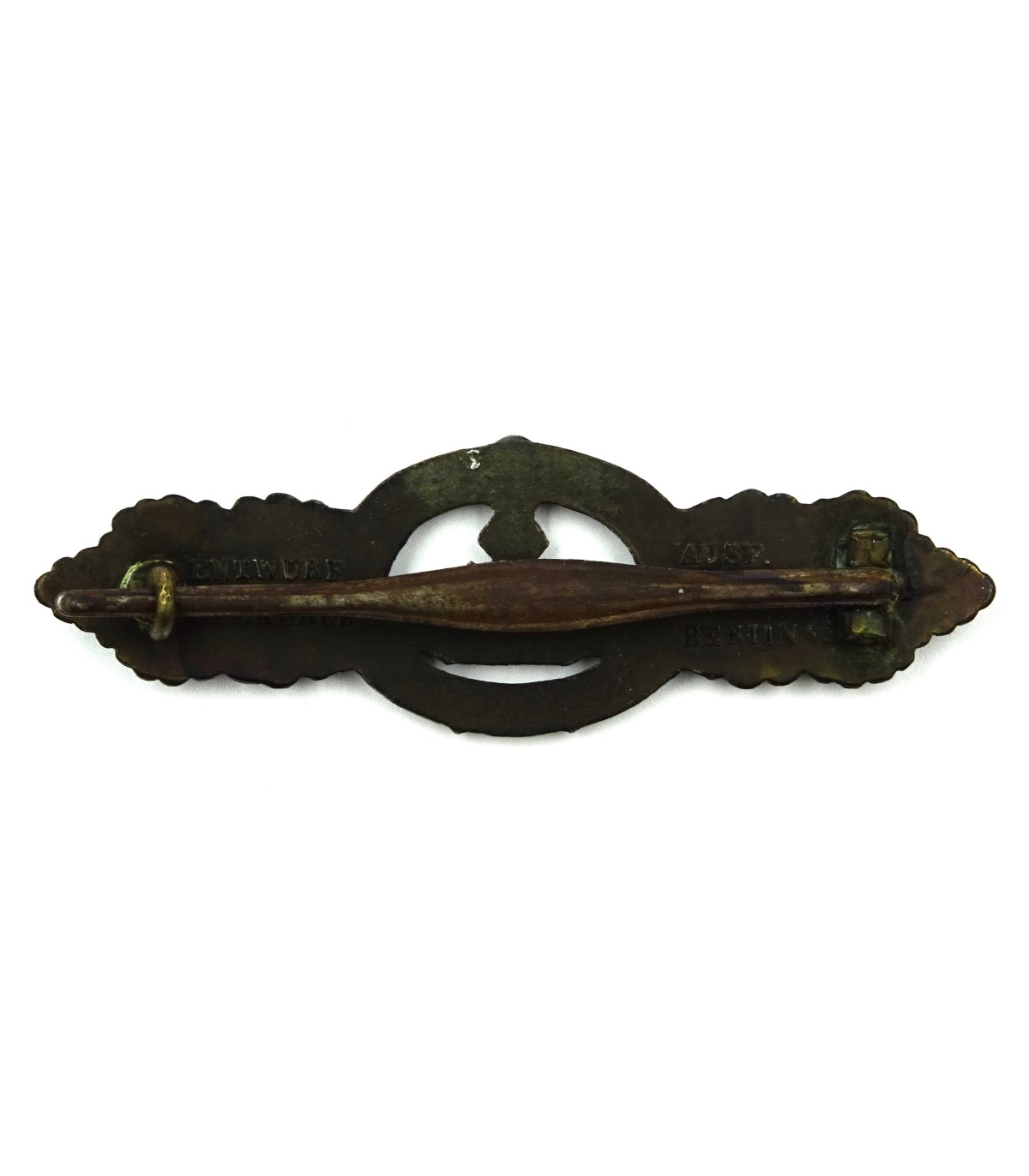
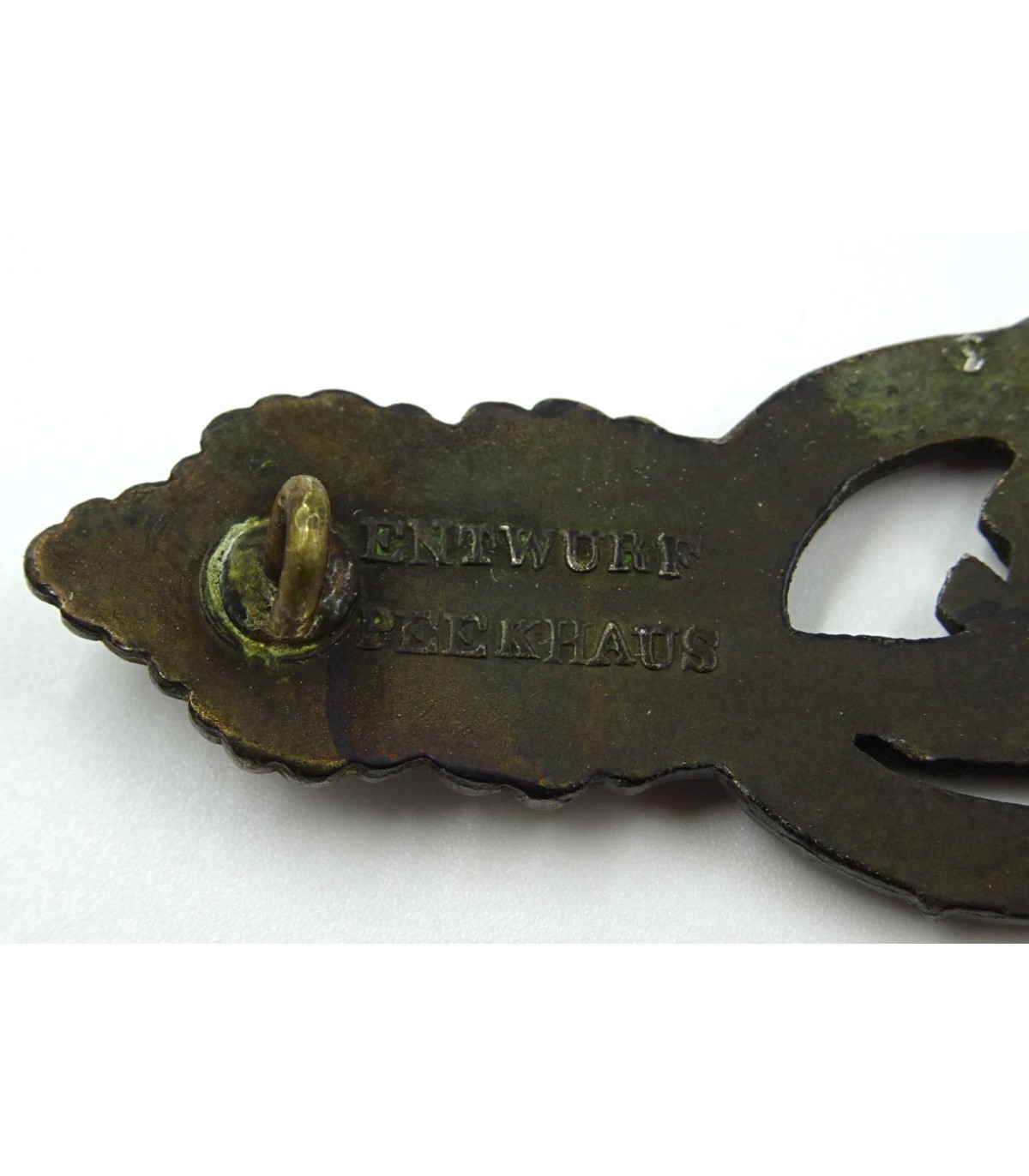
Scare late war Kriegsmarine U-Boat Clasp Bronze By Schwerin Berlin (U-Boot-Frontspange Bronze). Constructed in bronzed zinc, the obverse consists of an oval laurel wreath, with a raised U-Boat in the centre with a hollow backdrop topped with a Kriegsmarine National Eagle clutching a mobile swastika, flanked on each side by oak leaves. The reverse of the clasp is embossed with the manufacturers name and location Ausf. Schwerin Berlin 68 and the designers name Entwurf Peekhaus complete with horizontal tapered pinback with an integral hinge and a crimped flat wire catch, measuring 76.46 mm (w) x 24.08 mm. Nice patina. Very good condition.
| historical background |
U-Boats formed the submarine force of the Kriegsmarine and occupied a central position in German naval strategy during World War II. Their development took place within the context of German rearmament during the 1930s, following the restrictions imposed on Germany after the First World War. From 1939 onward, increasing numbers of submarines were committed to a campaign aimed at disrupting Allied supply lines and reducing the flow of goods reaching Great Britain. The early years of the war were marked by significant successes in the Atlantic, before improved detection systems, convoy organization, and Allied technological advances gradually changed the balance of power.
Between 1940 and 1942, submarine warfare intensified considerably. U-Boats operated mainly in the Atlantic, but also in European waters and the Mediterranean, from a network of bases and flotillas established along the occupied coastlines. The “wolf pack” tactic (Rudeltaktik), in which groups of submarines were coordinated against Allied convoys, became a defining feature of this period. From 1943 onward, the situation changed rapidly with the development of radar, intelligence gathering, air surveillance, and improved anti-submarine tactics. German losses increased sharply despite the gradual introduction of new U-Boat designs and technical improvements, while the effectiveness of the submarine campaign progressively declined until the end of the war in 1945.
This rapid evolution of submarine warfare is also reflected in U-Boat-related objects and effects, whose characteristics can often help place a piece within a particular period of the conflict. Manufacturing details, markings, patterns, and features associated with crews and individual units are today important elements in the study of Kriegsmarine material. U-Boat militaria therefore represents a highly specialized field, closely connected with the history of German naval warfare between 1939 and 1945.
Please sign in first.
Sign in
Create a free account to save loved items.
Sign inCreate a free account to use wishlists.
Sign in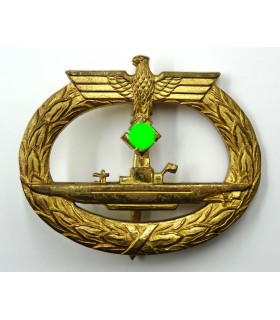

 Français