


Wehrmacht Heer
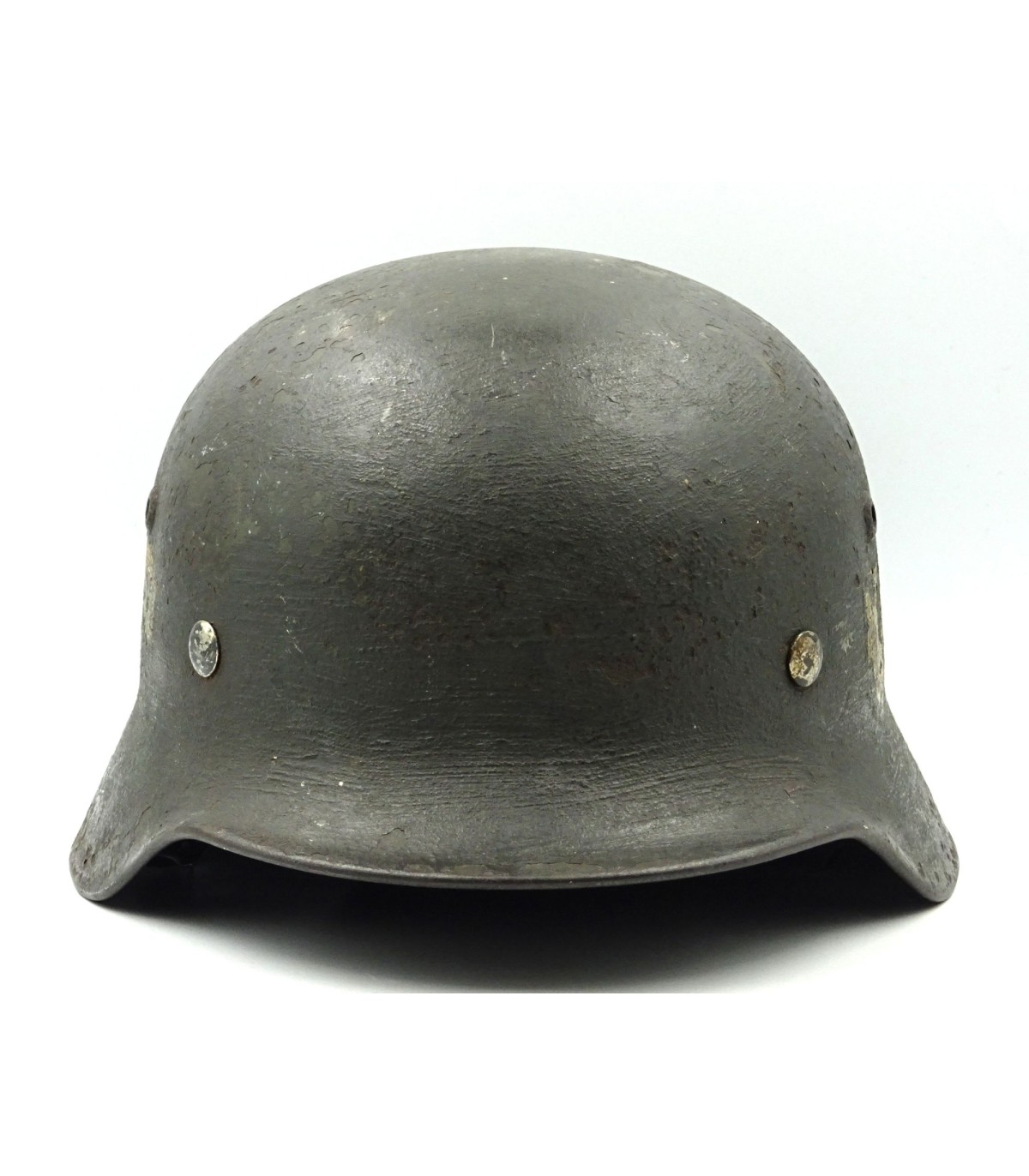
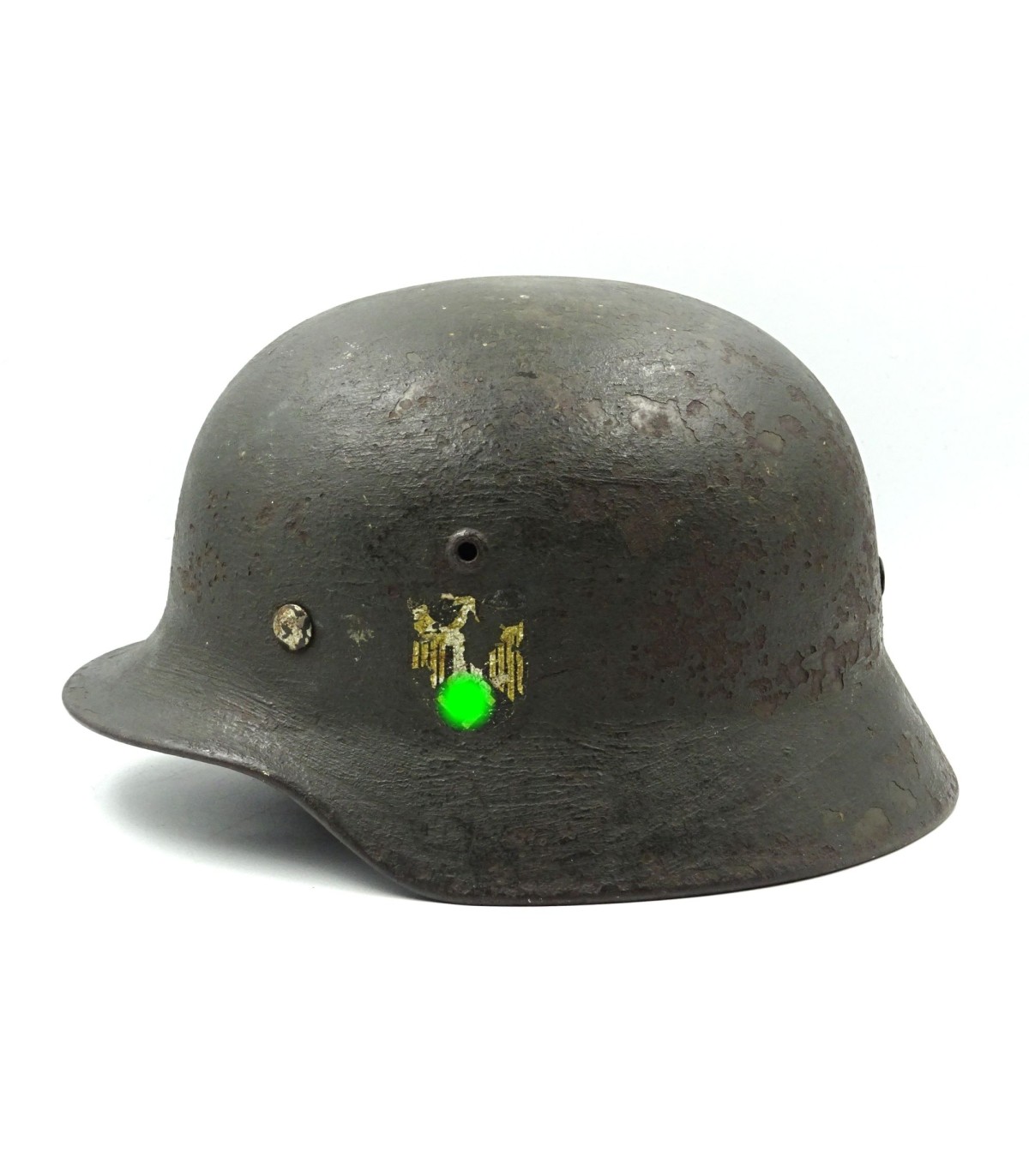
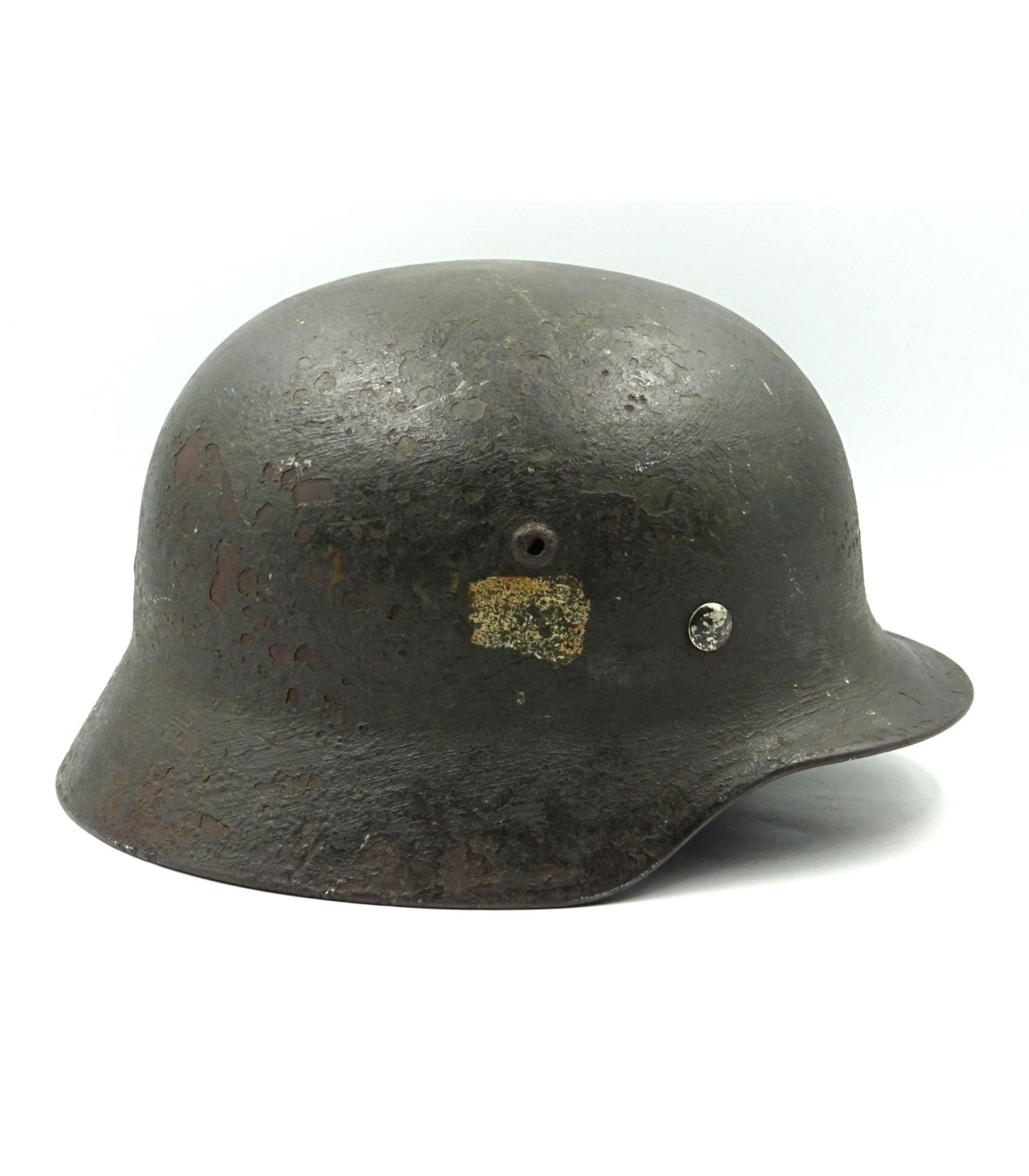
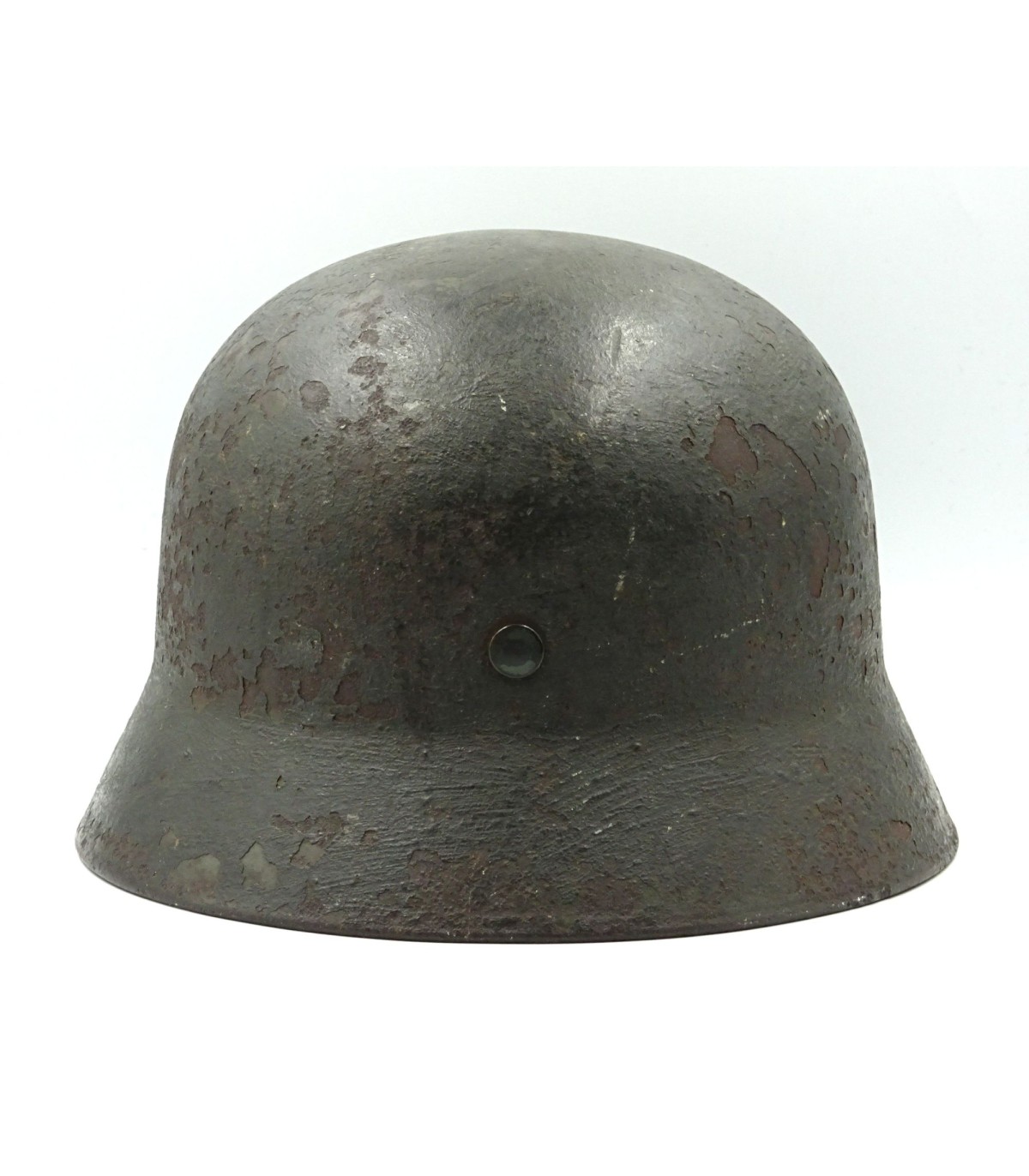
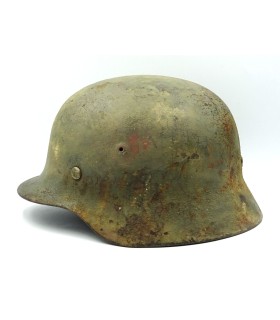
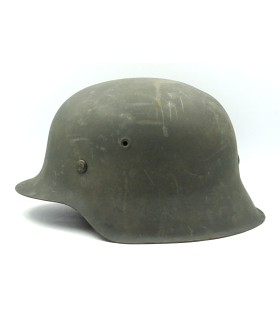
WH M35 single decal helmet
€740.00
(VAT incl.)
Reference:
GR082
Love0
Add to wishlist
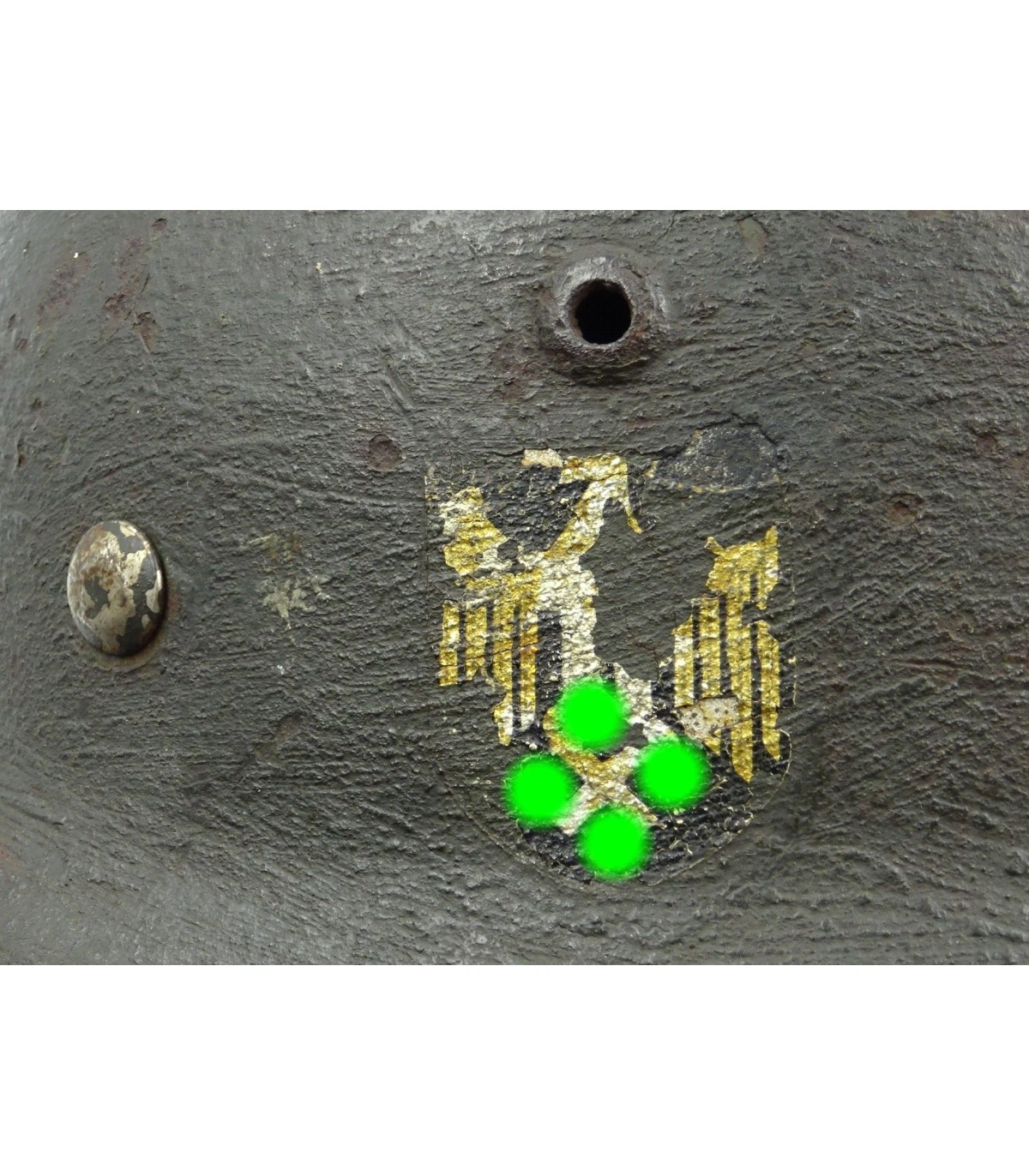
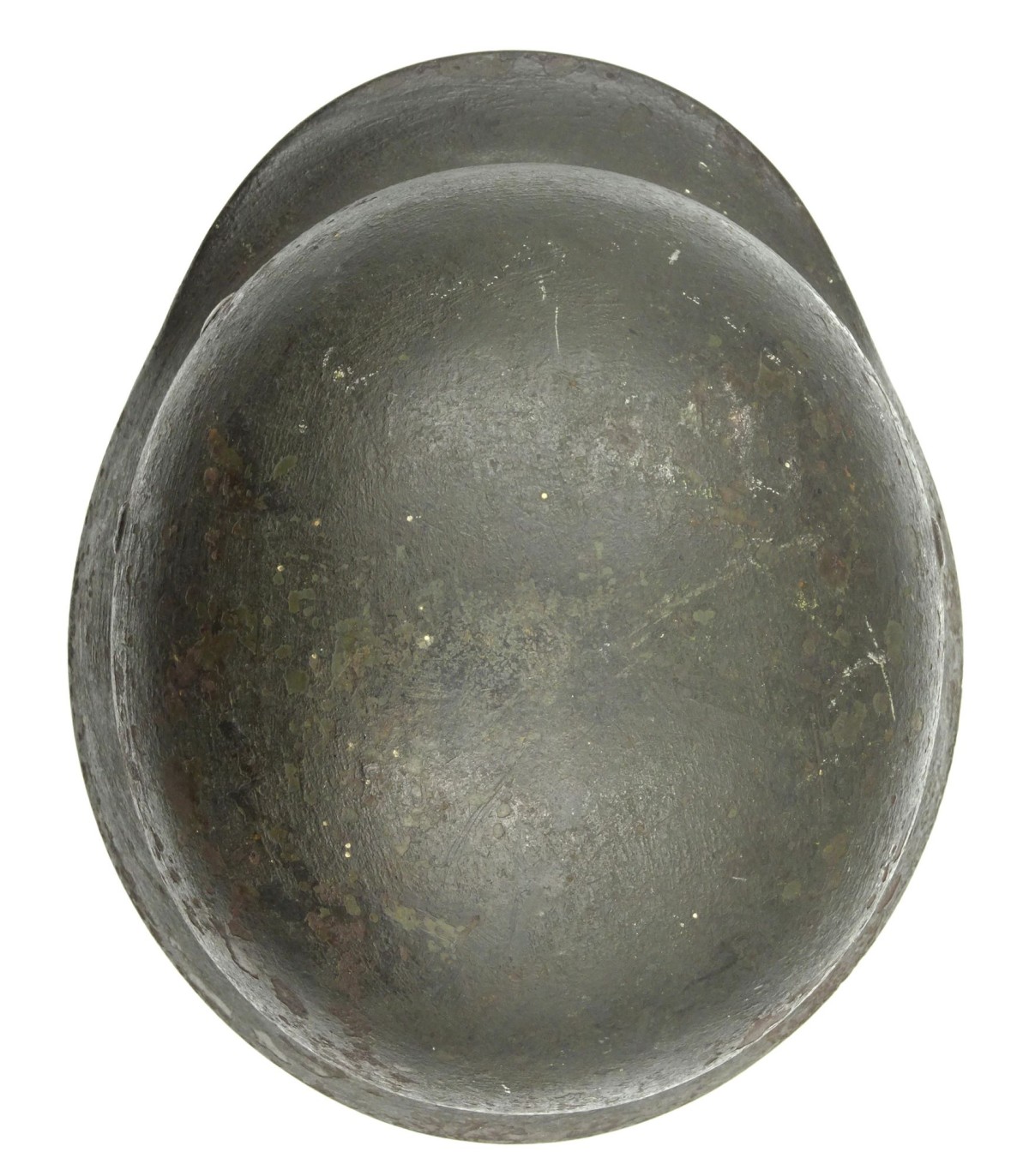
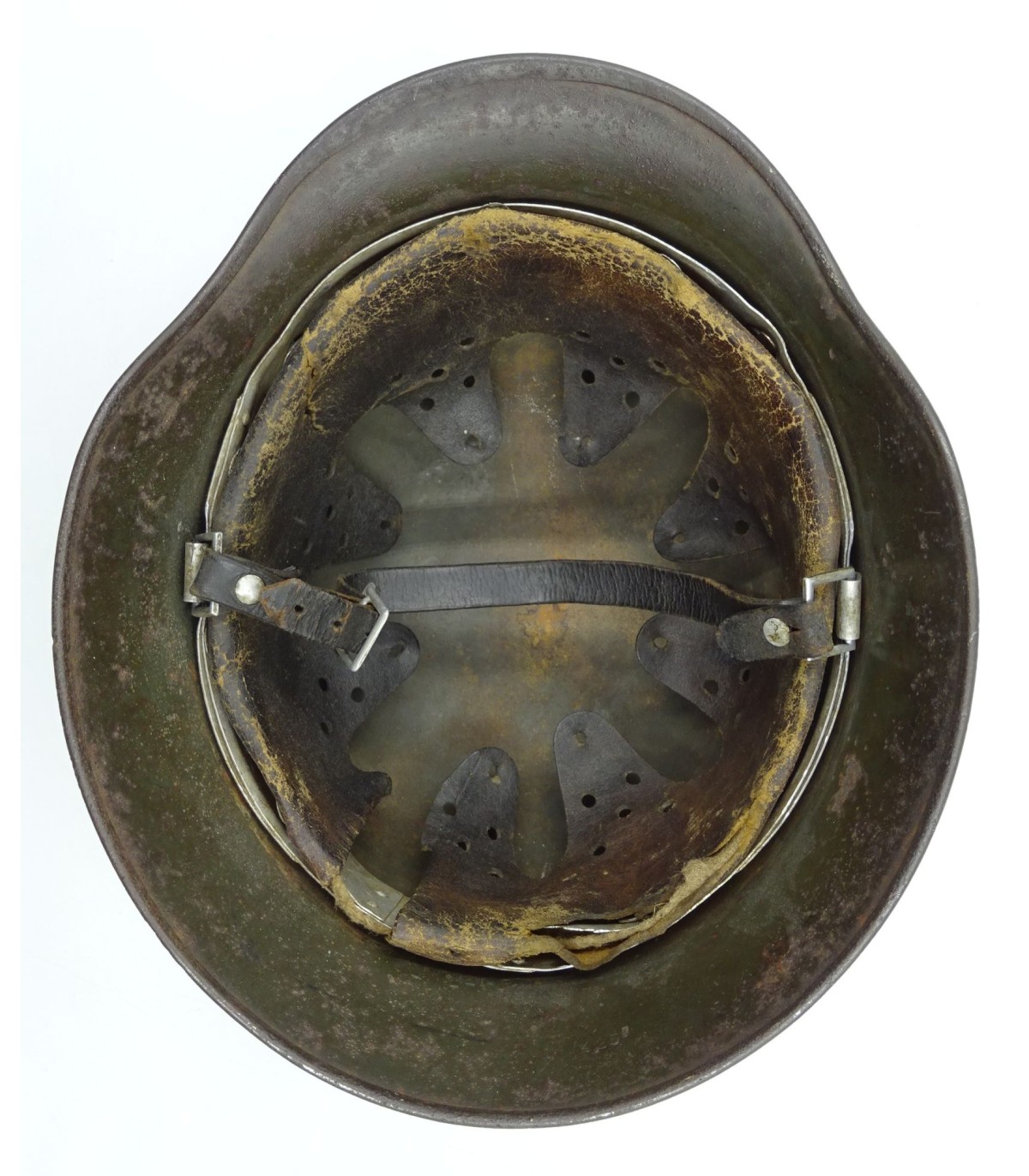
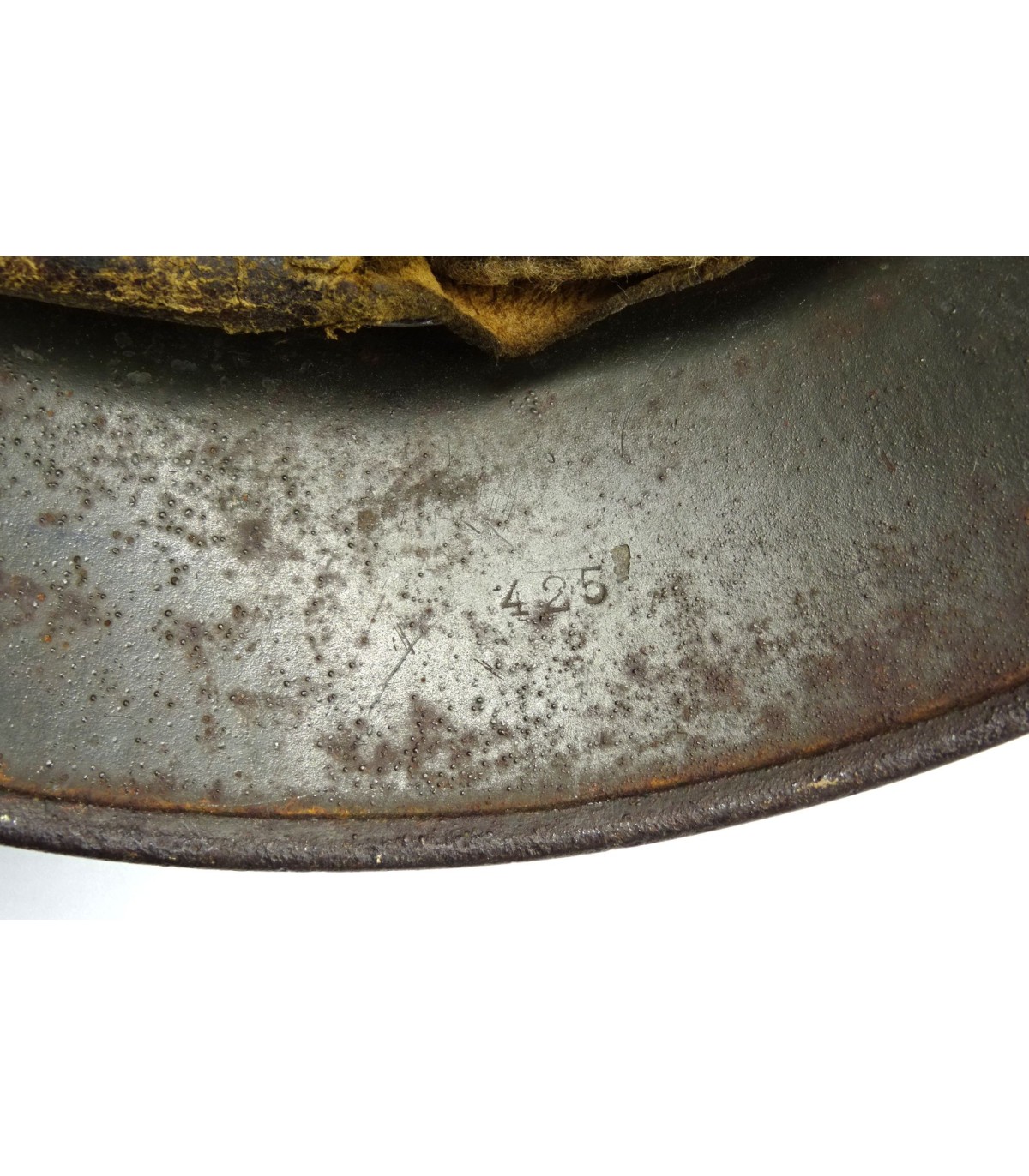
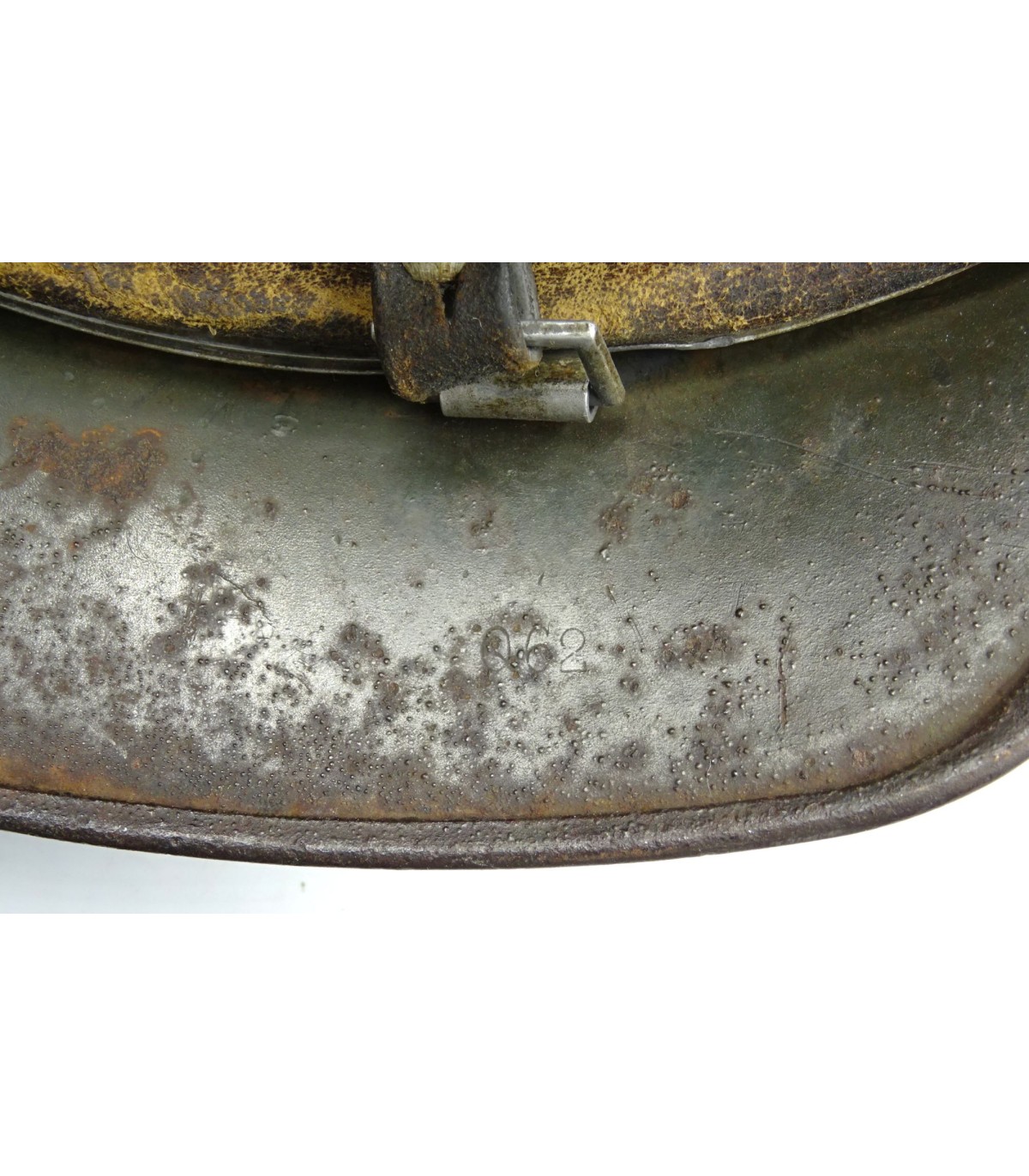
Q62 #425, size 55. Received a regulation granular feldgrau paint job that covered the tricolor patch. 60% of the WH Eagle is present. Aluminum liner and chinstrap fittings. A good combat helmet showing its age. Average.
| historical background |
The Model 35 helmet (M35) was introduced in 1935 as part of the rearmament of Germany and quickly became the standard issue helmet for the armed forces, including the Heer and the Luftwaffe. Recognized for its well-balanced shape, rolled edges, and separate ventilation bushings, it represents a refined stage in the evolution of German steel helmets. From the outset of World War II, the M35 established itself as a benchmark in production standards, combining industrial quality, functionality, and a strong visual identity.
Manufactured between 1935 and 1940, the M35 was deployed across all theatres of war and branches, with variations directly linked to manufacturers, production batches, and service allocation. Surviving examples display a wide range of configurations, including coded shell markings, branch-specific decals (Heer, Luftwaffe), original or reissued finishes, and patina consistent with field use. These factors form a critical framework for accurate identification and classification.
From a historical and technical perspective, the M35 stands out for its pressed steel construction, rolled edges enhancing shell strength, and separate ventilation bushings typical of early production. These features were later simplified on subsequent models (M40, M42), making the M35 a key reference for early-war equipment. Closely associated with the re-equipment of German forces and the opening phase of the war in Europe, it remains a central model for the study of WWII German helmets.
You may also like

€1,600.00
(VAT incl.)
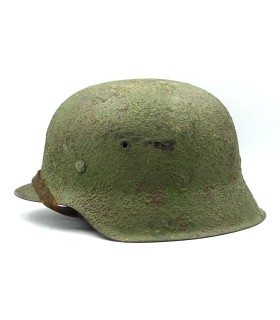
Superb WH M42 helmet with rough-textured finish
€2,600.00
(VAT incl.)
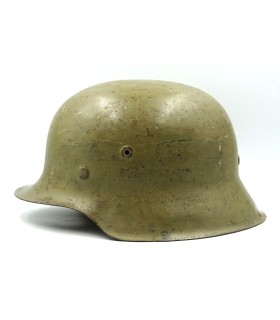
Police double decal M42 field division helmet

 Français